Tuesday, March 01, 2005

When is a Sick Day Not a Sick Day?

So - two days at home, one afternoon nap, two after dinner work sessions, as well as all day, both days. What is a sick day currently?
wool
And why the wool? A metaphor for learning GoLive. How does one learn a complex tool? Where does one start? What thread do I pull out the allows me to follow it into the creativity I seek?

All day, and almost nothing accomplished! Ahrggg!

Monday, February 28, 2005

Gladwell's blink


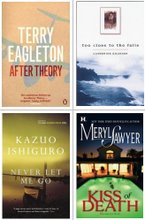
Only someone who loves reading could have drawn this Posted by Hello

I just finished reading Gladwell's blink today. What he says makes total sense to me. It's the scientific, academic information that backs up something I've been (sort of) aware of since I figured out how to write multiple choice tests in high school. I can't remember how I figured it out, but I do remember knowing that I should go with my first (instinctive?) choice, rather than thinking about it. If I thought about my answers, I got lower marks than if I just "guessed," so I "guessed." I remember feeling guilty because my friend Barb, who studied harder, I thought, and often helped me review, sometimes got lower marks. She tried too hard.

I remember reading somewhere, years ago, that if runners ran full out, and at 3/4s effort, that they often ran faster at 3/4s. Same thing, I guess.

And I really like how Gladwell writes, with information embedded in narratives, and descriptions of the people involved as researchers or as examples. He humanizes knowledge.

I was a bit disappointed that he didn't mention Michael Polyani, because I think some of the research, especially the stuff about "implicit" knowledge, was rooted in Polyani's thought.

And it is relevant to teaching. The rules about how to make an improv work were interesting, and I often think that teaching is a lot like performing an improv, and "mindreading" the student's faces to see how it's going over (or rather "in"). The part about Rip and the red and blue team, reminded me of how the rules can be used by people not in the classroom to actually diminish a teacher's skills and abilities. Some people prefer power to understanding and success.

Saturday, February 26, 2005

Wednesday, February 23, 2005

Using Picasa


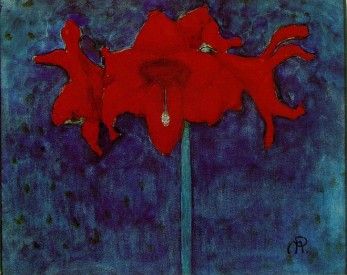
The frustration of learning relieved by beauty Posted by Hello

This picture by Mondrian was uploaded using Picasa2 and Hello.

Wednesday, February 16, 2005

PRACTICE

Here is a photo I took and, using Flickr, posted here!

My thinking tool

Sunday, February 06, 2005

Do the Tool and the Times Make a Difference?

I believe that the act of writing is changing. We have a radically new tool, no make that plural, we have radically new tools, and we think through them differently. Does anyone think we would write the same way with a quill pen as with a ballpoint pen? Does writing with a pencil change the way we write from how we would write with a fountain pen? And the big question, does writing with a word processer in an online environment change how we write?

The second question is, do we humans write the same way at different points in history? Do I write like Aphra Behn? or George Elliott? or Emily Bronte? or Virginia Woolf? or Margaret Lawrence? or Margaret Atwood? Or even in a similar style? Of course not. And are patterns in writing changing? I've read that articles in scholarly journals written in the 1930s were much denser and more formal than modern articles. And magazines are very different too. Do we even think about writing the same way as writers did then?

Now that we can write and "publish" for the world to read with no publishing "gatekeepers, now that we can write knowing our spelling mistakes will be automatically pointed out to us, and a correct possible replacement offered to us, now that we can write, and change what we've written immediately with no traces of the previous wording left, now that we live in a world with informal writing, email and messaging, for example, as well as formal business reports, do we all need to know formal stylized rhetoric of the 1960s?

Tuesday, February 01, 2005

Tuesday, January 18, 2005

Monday, December 27, 2004

Thoughts

My thinking tool
The twentieth century was a time of great expansion of representational modes. The development of photography, sound recording, moving images, movies, radio, and television has led to our culture being increasingly dominated by human-made semiotics. However, during most of the past century, the need for elaborate skills and equipment meant that cost limited authorship in these new representational modes, as it did for the more established mode of print. Despite, or perhaps because of, these gatekeepers, audiences were educated in these new representational modes simply by passive immersion. These new modes were not widely or systematically studied in how they represented (rather than simply as crafts to be learned for a limited few producers/authors) until the last quarter of the past century.

In the twenty-first century we (and our students) are in Ong’s “secondary orality” as more and more of us take in information holistically from the semiotic sea that surrounds us, rather than analytically and reflectively from printed text. At the same time, the representational gatekeepers of expensive complex equipment and skills have been largely removed. The ubiquitous computer and Web have created tools that are increasingly “affordable” and “user-friendly” which allow us (and our students) to individually create in the new representational modes developed in the twentieth century - photography, sound recording, moving images, movies, radio, and television, - as well as in the traditional alphanumeric print. And we can publish our work online to a worldwide (potential) audience.

How do we teach (and test) in this rapidly evolving semiosis? How do we shape curriculum for digital natives while we are still immigrating into the digital world ourselves? Are our students thinking and/or learning differently than we do or did? And if so, how? Is a photographic essay “equal” to a word-processed essay for teaching and/or for showing a student’s knowledge? And what about a sound and/or video documentary? Will our students learn more or more deeply from such representational modes than from text? Even if we focus exclusively on written text, as I will, what are the changes in writing brought by word-processing and the Web?

The computer is not a typewriter and the Web is not a collection of books. Teaching academic writing and business communication currently demands teaching the tool as well as the process, and teaching the visual as well as the verbal impact of structuring language. I believe we teachers of writing (and teachers using writing) must step off the dock of past practices into our digital boats and launch ourselves into this shifting semiosis.

After many years of teaching using the chalkboard and overhead, I was pushed into teaching academic writing and business communications using the computer and Web. For 10 years now I have been teaching Ontario post-secondary students, both college and university, how to communicate using the online computer – and learning from them. Since the late Nineties, I have been teaching using a Course Management System where I develop materials and then my students access them online, and in this process teach me how to teach online. In the last three years, I have seen radical changes in how the young, even the computer-reluctant young, combine writing and the computer. I have been learning about this new curricular space and how to shape it using the knowledge of the digital natives I encounter and helping those around me, whether labeled “teacher” or “student” to navigate in and through this shifting semiosis.

Monday, November 08, 2004

Not Enough Time

notime
Now, as I wait for a student who is overdue, I am grabbing some time to blog. Using Paint on the IBM the school provides for those using computers in their teaching, I give you my current descriptive image. I should be marking, but ... this is my break!

Bush, for four more years :-(

Caught between resenting the bad name being given by fundamentalists of all stripes to religion, and fear that their passion will destroy much that I value, I spend my time marking papers, fearing that my suggestions will go unheeded.

It's November. On dark days, I wilt; on sunny days, I can try to keep going.

An old poem:

November in School

In November, everything crashes -
files are lost,
cars slide into each other,
suiciding squirrels shut down generators

and I
am late for school.

In November, people weep -
assignments fail,
teachers and students snarl,
work done is less than hoped,

and more,
much more, is required.

In November, we fear -
even if Christmas ever comes,
even if spring only hides behind
the winter we have to endure,

we have lost
whatever we came here to find.

Tuesday, October 19, 2004

Time Flies


Time flies when I have taken on a lot of work. On the one hand I love teaching. On the other, marking is a part of teaching.

I had a wonderful rant yesterday. I was lecturing on how literacy has changed our very way of being in the world, the way our psychology is shaped. I was charged up with my understanding of Ong and Havelock and a rich sense of what they meant and I flowered into the moment and engaged the students.

I've felt this before; it is the sweet moment of teaching/learning. I can reach them, hold them, and then release us from a kind of electric exchange. It is what I felt when I "saw" the golden chords reaching from my fingers and touching the students when I taught English as a Second Language in the top floor of a converted warehouse. It is what I experienced in some of my poetry classes. It has been rare for me lately as I struggled mired in enmeshing change. I love it, but I can only prepare for it; i can't command it.

It is something to do with oral rhetoric. It is a moment of wholeness and fullness. It is a psychic embrace. I am grateful for the moment and the experience. I hope they are too.

Tuesday, September 21, 2004

Windows xp Ate My Files

Good thing I kept my backup CD and it wasn't too out-of-date. Today, in class, as I tried to show my class that you have to be careful where you save your files, I was surprised to discover that my largest, most important folder had simply disappeared from 'My Documents" and all the other folders were shortcuts. "Search" didn't find my lost folder for me.

When I went to the technicians, they muttered that xp hade done this to others too!!!!! They found some of my missing folders, but not all of my files. My backup CD helped, but this leaves me scared. Obviously I can't save anything important and back it up on my IBM; it simply can't be trusted.

Friday, September 17, 2004

Back in the Classroom, Again


I have been reassured and delighted to discover that my joy in the classroom still exists. After only one (very soul-destroying) term of teaching over two years of study and other projects, I am back in the classroom again. What I am enjoying so much is feeling like I belong, and can connect with my students. I hadn't realized how much I'd been afraid that I had lost my classroom "presence." It feels like home; I feel alive in my art. I love to teach, to really get my students grasping the content and skill I am teaching. It's a joy to activate their understandings and performances.

I suppose this is the honeymoon phase of my return. I only have limited marking so far, and the students aren't stressed yet with some possibly acting out. We'll see what the future brings, but right now, I am satisfied!

Tuesday, September 07, 2004

Very Bad, Very Bad


Today was my first day back at school as a teacher since last December, and it was very messy. But I must have some positive feelings about being back because when I played around in Illustrator and created this image, I liked it even though it seemed kind of not-negative.

I cancelled my first class, because my laptop wouldn't start, (for the second time since Window xp has been installed.) The students didn't have access to their computer lab accounts without their user names and passwords, and the new registration software isn't working very well, and they hadn't received the letters telling them what they are. I could have looked up their information one by one, but my laptop wouldn't start - have I mentioned that?

The printer doesn't have the new software installed so xp won't print to it, and I like to print out things like class lists and topical outlines. Even after I got a new hard drive and re-installed all my info, I couldn't print. No matter, I couldn't get at my class lists because the new software, changed my name (I use my second; it used my first) and so wouldn't let me read my data.

Then I went to another campus for another course, but the program is moving and was neither at their old spot, nor their new one in a quite unfinished building. It took me an hour to find that out!

I did not have a good day.

Friday, September 03, 2004

My Thinking Tool

I'm more dependant than I'd thought. I start teaching on Tuesday, and so I have to prepare. I am using WebCT for 5 of my courses, even though I'm only required to for 2. The other 3 I have chosen to use WebCT as a Learning Management System (LMS) because I like the orderly way it contains all my course materials and makes information available to my students. I felt in control.

The school WebCT technician has been doing the changeover from the summer courses and upgrading our version, and for serious personal reasons had to be away unexpectedly while WebCT was unavailable. So I had other work to do, right? Yes but I couldn't think! Yesterday my courses were available, and I worked intensively all day, accomplished a lot, and felt in tune and coherent. I love feeling that way. I love looking at my course sites and tweaking them. I love creating them. It makes me feel creative and powerful! (Go figure! Some people just have weird needs ;-> or that's what I used to think.)

During the evening as I continued enjoying this energy surge, I made a few connections. While I was blocked from setting up my coursees in WebCT, I couldn't think and plan. Separate files to work on weren't enough. I couldn't think about classes, I couldn't plan my classes without my thinking tool for teaching - my computer and WebCT. And the other course I have at another institution, there's no WebCT there. So what have I started doing, even though I'm pressed for time? I'm creating a web site, of course, to support the class, and my thinking!

Thursday, August 26, 2004

avatar

avatar
avatar,
originally uploaded by Semiotic Explorer.

So this is how I imagine myself as a cyber-explorer, learning .... or fiddling around ;->

I hate summer colds!

I hate summer colds! I can't think through my thick sinuses and scratchy throat. I've sent out messages requesting what I need to know to plan my fall courses, and had no replies. Just as well, because I can't think anyhow, and I have no energy.

All too soon, I will be very busy. Ah! A teacher's life ;->

Thursday, August 12, 2004

Images, RSS feeds, & News Readers

Well yesterday I either worked very hard or did nothing at all; I can't decide which.

When I saw the picture icon on the Blogger Posting window, I just had to try it out. The least complex method seemed to be to use Google, find a suitable image, and use the code offered and the url of the image. It worked. As web stuff gets more user friendly, I move towards it by learning a few more "technical" moves. Picture a woman running, arms outstretched, towards an open laptop rushing through the air towards her. They embrace.

Spurred on by this success, I looked up definitions for RSS, worked on setting up the RSS feed for this, my blog. To find out if I had been successful, I clicked on the icon, took the link, and created a new channel in my Mac News Aggregator. It worked!!!! So now I'm going to start collecting educational blog channels. ZOWIE! I'm not sure what I'm doing but I'm doing it.


Wednesday, August 11, 2004

Phil's Film Workshop 10th Anniversary - Camping Resolutions!

I resolve never again to -
  • use a tent with the floor space of 2 air mattresses
  • sleep in a tent I can't stand up in
  • stay in a tent more than 2 fields away from the porta-potty
  • sleep on air mattresses over 20 years old and unchecked for air leaks


However, the people were a pleasure, the food was great, the films were interesting, and seeing dawn and hearing a distant farmer call out "co-boss, co-boss, co-boss" to his cows reminding me of my grandparents farm - priceless!

Tuesday, July 20, 2004

Print: From Tyranny to Democracy

From Walter Ong's writings, I learned the term"chirographic" - that's handwriting, - and its impact is different from print's. Writing raises consciousness, Ong says, and I believe that's true both culturally and individually.

I remember friends who were studying for their PH.D.s in Education saying that getting their degrees had a profound impact on them, that it changed them deeply. I nodded, of course, and thought maybe they were exagerating. Now, I'm beginning to understand what they said. Part of it is simply the reaction from people around who honour and value this achievement, but reading Walter Ong has convinced me that it is also the impact of the prolonged meditation that writing a thesis is. People are changed, - I am feeling the change of attitudes towards me, and a complex of awareness that my writing has created within me.

The most important seed of my writing was my learning to write using a computer and word processing software. My handwriting blocked my writing because I regarded it as visually inadequate, signalling low status thinking and it was physically difficult too. Also, my years of intense reading and the academic culture had caused me to think that the only "real" writing was that which was printed. Books were "real writing" and handwritten notes were just rough notes, no matter how much I had tried to do a good job of writing.

Because of the material structure of publishing, few people got to be published. It was expensive and complex to do and so there were many gate-keepers. Thus, the tyranny of print, more visible now as the stranglehold of published is being loosened and lessened. Word processing, desktop publishing, web sites, and blogs are creating a new democracy of print, where individuals with access to comparatively inexpensive equipment and communication links can present their ideas, thought, words, to a much broader audience with few, if any, gatekeepers.

This is creating a new understanding of communication using print. Using keyboarding and software knowledge (and online computers) is different from using chirograhpically produced text and the publishing industry. We are learning this new thinking/communication tool, and beginning to understand that it affects us profoundly.